 It is the year 2500. Phosphorus mining has exhausted all stores of rock phosphates in most known parts of the world. We are trying to …
The flame flickered. She put a hand up to shield the tiny tongue clinging to the match.
You are our only…
Darkness. And in the early morning dark, silence. It gets quiet out in the pits. She sank back against the hard sand wall, closing her eyes to keep the image of the man glowing behind her eyelids. The mine was deep, circling down many levels like a partially unearthed ancient city. The word archeology didn’t exist in her vocabulary but when she felt ancient she came here. Sometimes they found trees here, slowly turned to stone from millions of years of conversation with the sands of time. She knew the word fossil. Everyone in Udaipur did.
The image was disintegrating, blurring around the edges until only the forehead and nose and throat of the man were left, glowing redly in their mahogany tones. She sighed, opened her eyes, took in the small stack of matchsticks, sizing it up. Ten, maybe 15 conversations left in them if she was careful. Should she risk one more and find out what it was that they were trying to do? What only she could do? She wiggled her toes in the fine red dust, considering her options. First, this was no longer a fun but weird secret. They looked like they were in trouble. Second, she was ten years old – old enough to know she was too young. And third, going to an adult would only get her into trouble without getting those people out of trouble. She knew adults. They walked around pretending to know what they were doing but honestly that was only true if what they were supposed to be doing was trying to ruin everything for everyone. Like this matchstick thing. Imagine if she went and said to an adult that she had actual conversations with people she could see and hear in the flame of a matchstick. Yeah. That would not work out well for anyone, assuming they actually listened to her. Because who listens to a girl anyway – especially one who, even at ten years old, still hovered at hip level to an adult, and spoke in a gruff, scrapy, voice. Even her mother had stopped telling her to speak up and just ignored her unless she shouted.
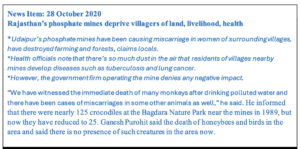
But her jaws hurt and her throat closed tight if she tried to speak louder than a whisper. It’s 1970, for crying out loud, she told herself fiercely. People should be listening to women when they speak. Even little girls. She certainly knew more about women in her town than her mother did. The miscarriages and still born babies might be hushed up in the middle class living rooms where her mother drank tea and arranged marriages with the other aunties, but the women who came into the mines had grown accustomed to seeing the ten year old with her nose in a book under a rocky overhang, behind a largeish boulder, tucked into a sandy crevice, and they no longer minded if she heard them talking and crying and gossiping. And the whispered stories of another baby pushed out before it was ready, another one that didn’t cry when it emerged and couldn’t breathe, they crept into her ears and poked at her brains. S0 many of them, following so quickly one after the other that they crowded and pushed at the membranes of hearing and she was beginning to register the sharp edges of fear.
She cleared her throat a little and reached out, fingers hovering over her little treasure pile. Maybe it could wait. She itched to know what she was the only instance of, what they were trying to do, what on earth it meant to say it was the year three thousand. But it could wait. Light was lowering itself into the pits like waterfalls in slow motion and soon her little nook would be flooded. She rose, pulling the waistband of her shorts more snugly around her tubby middle. Her mother let her dress like a little boy because she said she looked like one. A fat one, her sister would say, poking the round tummy, but she didn’t mind. If she could continue to wear shorts she could look like a little hippo for all she cared.
“Arre Lattoo! Why aren’t you in school??” Her mother sounded annoyed. Nice to see you too, muttered Lata in her head. “It’s Saturday, Ma,” she said aloud, the eyeroll audible but invisible. Mrs Mathur humphed, softened, patted her lap. “Come, sit.”
Lata giggled. “You’ll be totally crushed, Ma. Like a pappad!” She clapped her hands together to show how flattened her mother would become if she sat on her, but Mrs Mathur grabbed her around her waist and pulled her onto her knees. “What kind of foolish mother is flattened by her baby?!” she scoffed, squeezing the girl. Lata leaned back into her mother, settling into the comforting scents of starched cotton and talcum powder. She let herself be rocked gently, back and forth, as her mother sometimes did if she had a child – any child – on her lap; a kind of muscle memory of her years of mothering. “You’ve been in the mines again?” she murmured absently, brushing the fine dust still clinging to Lata’s shorts.
The girl went still, bracing for the scolding and admonitions, ultimatums, perhaps even punishments. But her mother squeezed her again, gently. “What, you think your old mother knows nothing? I’m useless or what? Eh?” She poked her silent daughter with her nose, her arms still locked tight about her waist.
“Mamma,” began Lata.
“What ‘mamma’,” Mrs Mathur responded. “Beta, I just want you to be safe. You go so early in the morning…” Lata felt a pang of guilt at the thought that her mother would really worry for her safety if she knew that Lata walked there in the middle of the night! Aloud she said “Ma, there are women there in the morning. You know how early they come.”
“Which which women?” asked her mother. “Who who is there, tell me?”
Lata rattled off a few names nonchalantly fiddling with a salt shaker, confident that her mother, who did not hang out with ‘those women’, would not know one name from another. Mrs Mathur narrowed her eyes as she listened, registered a couple of names, and nodded to herself, satisfied that her quiet conversations with them had been effective. She didn’t really have to push her request very much; the women were fond of her little Lattoo and readily agreed to keep an eye on her. Keen to change the topic, Lata said the first thing that came into her head.
“Ma, you know they found a dead crocodile yesterday? And imagine, its teeth were all gone! Big holes, Mamma, where the teeth were supposed to be!” She twisted about to fix her mother with the wide-eyed fascination of the hard-to-horrify young. Her mother looked at her with interest. “The teeth gone? How odd!” They stared at each other in fascination for a few moments, searching each other’s faces for clues as to the mystery of the holey jaw. Then, with a subtle change of expression that Lata barely caught, Mrs Mathur looked away, laughed lightly, and said “the crocodile tooth fairy must be having a field day, eh?” and playfully tipped the child off her lap. “Now run along. I’m sure you have things to avoid doing today. Have you cleaned your room?” she called after the disappearing girl.
Lata waited till she heard the room door shut, picking at her lower lip thoughtfully. Then she reached across her tea cup, replacing the tea cosy on the already cooling tea pot, picked up the phone and dialed quickly. “Salima? I think it’s time.”
Then she got to her feet, replacing the receiver, and went into the kitchen where the cook was kneading dough. “Ravi? Come. Leave it – he will make it himself if he wants it.” Ravinder washed her hands and followed Mrs Mathur out, wiping them along the sides of her kurta. They both slipped on sturdier outdoor slippers and went out, shutting the door behind them.
Lata watched them leave from her window and threw a leg over the windowsill, dropping lightly on to the ground outside. She closed the shutters, leaving a tiny gap that she could slip her fingers into when she returned, and shouldering the little sling bag, she hurried back to the mines. She had packed quickly and efficiently and now worried only about getting to her usual spot unseen. In her mind she went over the list she had put together in her notebook (neatly tucked into a flap in the bag with a clutch of pens) making mental note of Sai and her triplets, Madan’s now-bloody cough, Hira’s persistent chest pain, and Nadira’s swollen jaw – all to be added to the several pages of inexplicable deaths, ailments, mutilations, and birth deaths. A couple of more matches, then. Why not today.
The flame rose high and unwavering in the still summer air. Lata tried not to breathe much so that the face was clear. The shallow cleft in the mine-wall that she used was deep enough to provide some protection from the outside air, but there was not a lot stirring today, anyway. Today, she could see the lines cut deep into the forehead, the trenches along the nose that appeared clawed into the long face. The down-turned mouth pulled the trenches down to the jawline. In the flame, the eyes glinted with reddish yellow lights.
“But you can’t have used it all up,” Lata pressed on. She had done her reading. “Phosphorus is meant to last for centuries!”
“If it is mostly used for fertilizer, yes,” he said. She thought he was breathing hard but she couldn’t distinguish the sound from his mouth from the strange noises that surrounded him. Yet, there was no doubting the deep sigh – a letting out of breath that was filled with anger, regret, sadness, frustration.
“Not if it is used for war. Grenades, explosives, guns, bombs. Not if war is more important than food. Not if we use it to kill each other rather than to feed each other.”
“And now that there is no phosphorus, there is not enough fertilizer, and so there is no food?” She forced her voice to turn up at the end of the sentence so that there was still space for it to be a question with other possible answers; so that it would not be a statement of fact.
The man neither accepted nor denied this possibility. He stared right through her. He said
“We spent our limited time and resources on inventing new ways to explode each other’s homes, when we could have been inventing new ways to grow food.”
Lata was furious. She would have screamed were she not acutely aware of the fact that anyone might hear her at any moment. But the man winced at the force of her whispered words. And when she was done he felt released from an almost physical grip. He shuddered even as the flame began to gutter towards its end.
“Save the crocodiles,” she heard him say, urgently, quickly, trying to get the words in before the contact was severed.
“Save the crocodiles! We need their”. In the silence, Lata was left with a singed thumb and anger.
What was wrong with people?! Lata glared at the blackened matchstick in annoyance. Why couldn’t they say what they had to say? Save the crocodiles? What could this man from a hundred and thirty years in the future possibly want from the crocodiles of the 1970s! We need their what? Skin? Teeth? Tears?? Hah. Adults. She may be young but she read stuff and she knew things. She would figure this out. If save the crocodiles was what she needed to do then save the crocodiles she would! She got up, dusted herself off, trying to remember if the local club would be open this early and if they would let her slip into the library if it weren’t. It wouldn’t be the first time. Head down, she rummaged in her pockets for her library card. Her mother made sure Lata’s clothes had multiple pockets sewn in, of varying sizes, with zips and without; her daughter’s life would simply not be navigable without pockets.
Even with her head down and her hands occupied, her senses, constantly alert around the mines, picked up an unusually dense thud of footsteps. One or two people, even the morning clatter of groups the groups of ten that came in teams to work, were part of her archive of sounds. But this. This sounded more like thirty or forty. Sixty? She veered sharply and headed in the opposite direction picking up the pace and rammed headfirst into a soft wall. Even before she had extricated herself from the folds of starched cotton and registered the bumps and recesses of a matronly body, she knew whose face she would find glowering down at her when she finally tilted her chin upwards and unscrewed her eyes.
Mrs Mathur gazed down at her daughter in mild astonishment, only just stationed safely in her room, absorbed, no doubt, for the next many hours in getting her sundry belongings off the floor, bed, desk, chair, or any other accommodating surface, and into the cupboards, drawers, shelves, racks, and hooks provided for them. Her mother lived in hope that one of these years Lata would learn the functions of furniture and had thought this might be the day; yet here she was. Loitering about the mines in her shorts. To her credit, Lata registered the absence of expected rage, noted the humming crowd of women surrounding her mother, read the block capital ‘HARTAL!!’ printed at the top of the flyers in her mother’s hands and the placards with slogans, some mounted on sticks, in the hands of the women, took in the determined, chin-thrust on their collectives faces – and knew that her mother was up to more trouble than she was. Mrs Mathur broke stride long enough to shrewdly size up her daughter, come to a decision, put a hand on her shoulder and turn her about smartly so that she now faced the same way as the protesting women. “Well,” she demanded, “what are you goggling me for?!
|
Volume 10, Issue 2, 30 January 2024, e24583 https://doi.org/10.1016/j.heliyon.2024.e24583
Get rights and content
Proteomic analysis of crocodile white blood cells reveals insights into the mechanism of the innate immune system‘
Abstract
Crocodiles have a particularly powerful innate immune system because their blood contains high levels of antimicrobial peptides. They can survive injuries that would be fatal to other animals, and they are rarely afflicted with diseases.
|
Let’s go!” Lata’s surprised splutters about crocodiles were drowned in the loud cheer and shouting of protest chants as the women moved towards the mine centre as one entity.
In the wake of screaming headlines from 2024 that proclaimed ‘Dieting bonanza!!’ “Food industry fights back – ‘dieting women will grow crocodile scales!!” and other such, Dr Lata Mathur, now in her late 50s, speaks of her pioneering work saving crocodiles from phosphorus poisoning.
Leaning forward to rest her elbows on her large, messy, desk, Lata tried not to let the indulgence she felt show in her smile as she watched the young reporter take notes while she spoke. The cargo pants had pockets enough to still delight even her now middle-aged heart and she noted the many coloured pens in the shirt pockets with approval.
“So, Dr Mathur, what made you think of saving the crocodiles so many years ago? I mean, that campaign is legendary now, of course, and all kinds of climate change and environmental, and animal rights activists and movements have drawn inspiration from it. But these ideas were not even in the public mind in the 70s. So how did a child of ten come up with this notion?”
Lata saw the adulation in the eyes and allowed it to warm her heart for a moment before the little bubble of hysteria caught in her throat. Oh to be able to say that a man from the future had commanded her to save the crocodiles! That a box of matches that she had picked up from the mine floors and carried with her to light candles to read by in the late evening had one day produced a flame containing a man’s face and voice. One of these days she would write her memoirs and they would put it in the Fantasy section in the bookstores. It required a determined pushing down of the giggles and pulling up of the tenured Professor’s face for her to look the young woman in the eye and respond with the truth – nobody had said anything about the whole truth.
“Well you see when I was growing up, this area was not as green as you see now. The land was devasted by the mining, cutting huge round holes into the earth, the air was filled with the while dust of phosphorus, and the lakes and rivers were poisoned with it. Where today you see a bustling and healthy population that has made this a centre of learning and the arts and inventions and scientific discoveries, there used to be entire populations plagued with the most insidious diseases; children born with all kind of defects and mutations, adults with deformed bones and failing organs. Have you seen images of phossy jaw?”
The reporter nodded quickly, her eyes wide, her mouth tight. Lata felt sorry for having mentioned it, but decided that this young woman was stronger than she looked.
“The mine workers’ strike put an end to all that. Or well, I should say that it began a longer struggle that resulted in putting an end to all that. And I should also say that while it is true that most people don’t take children – especially girl children – very seriously, my mother did. I thought I was on my own when the first crocodiles started dying, their teeth all fallen out, their bones full of holes. But because my mother took me along, marching with all the women, I was also included in their dharna afterwards. And through those long days and nights when the women sat in protest, we realized that the illnesses of the grown-ups were connected to the babies being born ill or dead; and then of course I realized why – I mean that I – that the crocodile deaths might be part of the same thing.”
“So – but – saving the crocodiles, I mean, we’ve heard stories, you know, growing up” – Lata smothered a smile; how old was this self-possessed but star-struck young woman, 17? 21? When she was ‘growing up’ were there already Ladybird books called ‘Lata Saves the Crocodiles’? – “So is it true,” the reporter was asking breathlessly “that you convinced the crocodiles to follow you to another lake?” The reporter laughed a little self-consciously, somewhere between the child wanting to believe this ridiculously romantic version and the adult knowing that there had to be a much more prosaic reality.
Crocodile Dictionary Vocalizations
Lata was prepared for this one. The actual publications about crocodile vocal communications hadn’t started coming out until maybe two years ago, so she could hardly claim knowledge of scientific discoveries now in the public domain. On the other hand, ‘the man in the flame showed me how’ was not going to go down well, was it. She cleared her throat, smiled.
“Well you’ve heard the story of the pied piper, right?” The reporter nodded, grinned, going along with the joke. “So,” said Lata carefully, “that was me. I figured out how to – I watched them and saw the sounds they were making when they – I mean it took me a while, but I heard the sounds they made when they were together, you know when a bunch of crocs are just lying there absolutely still you think they might be logs of wood floating in the water but you hear these very low sounds coming from them if you are very still and patient.” The reporter nodded again, not grinning, listening. “I think the scientific term they have now for it is ’infrasound’, the very very low frequency sounds that they make by vibrations in their skin” – she was losing the reporter, she could see from the furrowing brow; she hurried on, a little reckless now – “the New Yorker came out with an article about a crocodile dictionary last year” (little forced laugh, big smile indulgent of these non-scientific, popular understandings of science; the reporter laughed conspiratorially along) so anyway I practiced and practiced and I guess I was quite close to what they were communicating when they were at peace and feeling safe, and so when they started getting diseased I guess they were desperate and so when I made those noises they followed me to cleaner waters until their own lake could be detoxified!” Lata ended on a triumphal note so as to end discussion of the topic. It really wouldn’t do for this smart young woman to know that in the year 3000 they had invented a simple herbal concoction that would allow any prepubescent girl to reproduce those low frequency infrasounds with a little practice.
It is still the year 2500 in the flame. Lata learnt early on that the man there could track her through the years. “
Think of it this way,” he had explained to her in the late 90s. “
When you watch an old serial on your TV with a set-top box – what you call cable TV – you can choose which season and which episode you want to watch, yes? That’s what I do. I set my device to whichever year and date you happen to be in.” By this time Lata had long since figured out how to spot the matchbox that would contain matches that could connect her to the future. It wasn’t until the late 2010s that scholars would make the study of matchbox art an academically respectable thing, but ten year old Lata was already fascinated by the popular mythologies, historical figures – romantic Shah Jahan-Mumtaz Mahal ones or heroic Tipu Sultan ones, or just Bollywood stars and movie characters that were routinely pictured on matchbox covers. A particular trial run of covers with a simple red and yellow flame had proved not very popular. Marketing teams thought maybe this was too close to the actual function of the matches and did nothing to ‘fire’ (ha ha) the imagination of the masses, and the cover was discontinued with people wondering who had thought this up anyway. Little did they know, thought Lata. She would come across a random matchbox with a flame cover every once in a while – sometimes when she really needed a quick consultation, sometimes without any emergency at all. Occasionally it was a signal that communication was needed. Now she had a few stashed away just in case.
The evening after the interview, Lata went to her study and struck a match. The man looked older, somehow, even though it could not have been more than a few days in his life since she had first seen him half a century ago. She had always thought that he spoke to her from the midst of an ongoing war. The sounds of explosions, the erratic light on his craggy face, his own tense desperation, all gave the impression of the last of the soldiers – the younger men all gone – to stand as bastion against the apocalypse. Even though she had come to accept his absolute refusal to give her details about what was happening beyond what he had said to her when she was ten, her life-long dedication to her work was fueled by the urgency of a man making his last stand.
Tonight he seemed to sweat less, squint less, speak more clearly, than he ever had before. Even the light behind him seemed clearer, less muggy. He wasn’t smiling but he looked expectant; which was nice, because she had good news.
“Adhir! I’ve found something that I think will interest you!”
The man’s eyes glowed. Fifty years. She had laughed when she discovered that one of the meanings of his name was ‘the impatient or restless one’. Well, his impatience had urged him on till he found her. He had bided his time.
“So you know that we have known for a while that crocodiles can go for months, even as long as a year, without food, because of their low metabolism and their ability to conserve energy, right? But now – now I have discovered an enzyme that could possibly be developed into a drug that we could use to help people stockpile their energy. You know, in times of drought, or famine, or whenever they need to.” She left out the ruckus created in the body-shaming industry salivating over the endless possibilities for women to starve themselves into ever thinner extremes. Maybe things would change in five hundred years, but honestly, they hadn’t changed that much in the last five hundred when it came to holding women’s bodies to some impossible standard. Lata spared a fond thought for her own body – she had never ‘grown out’ of her ‘puppy fat’; she had grown into it more than anything else, and while she had added a few inches for a few years after she turned ten, they didn’t add up to much. She was still the short, tubby, person she had always been. And loved it.
Her excitement was good for him. Things were finally in motion and making some headway. But this discovery in itself would not have accounted for the significantly reduced scale of catastrophe that he had woken up to this morning. The entire planet was not subsumed in war, although some regions continued with their bitter, entrenched, conflicts. And he knew that he was not imagining the cooler, cleaner, air. As his institution had predicted, only the five people in the Historical Change Chamber following Lata’s progress over fifty year of her life for the last few days would register these changes. The rest of the world woke up to a changed reality with no memory or knowledge of any other reality before this one. A better world was by no means a done deal, they told each other every day, but hope was beginning to burgeon and after the decades of searching and researching and preparing for this moment, they were allowing themselves to imagine a different future for humanity.
“
That’s – that’s amazing, Lata!” Adhir’s mind was already calculating the progress of this discovery through its various, painstaking, processes till it reached the point when there was a safe and easily available and affordable way to dispense this drug when necessary. It might take twenty or thirty years, it might take a hundred. So much depended on the world spending its resources on this research rather than on war.
But Lata was not done. She barely waited to hear his response (although she did register the rapid blinking that might have been wetness in the eyes? Was that even possible?) before she hurtled on.
“We’ve found antimicrobial peptides, Adhir! It’s like a super-power that crocodiles have! Did you know – of course you know, you’re a thousand years ahead of us” – Adhir thought that they were perhaps a thousand years more savage because mankind never learnt from what it thought of as its mistakes. Because they were not mistakes. They were what humans did. Violence and greed and the endless need to hate. But he kept his thoughts to himself and leaned into the glass casing that opened up a window through time, showing the lively intelligence glancing off Lata’s eyes as she spoke. “There is no immune system like it known to us. It literally – you can plaster raw sewage onto open wounds on a crocodile and it will not contract a single infection. Imagine what we could do with that.” Suddenly she giggled like the ten year old she used to be. “We’re calling the peptides crocodylin and crocosin,” she hooted with delight.
Years later, she would still remember the moment she first saw Adhir smile. It was as if the flame itself flickered with the brilliance of its hope. She had to lean in to hear the softly spoken “
You have done well, Lata. We – the human species! – will all be … you have saved us.”
“It will be years – decades, maybe more – before we can make proper use of these discoveries, but imagine boosting the human immune system to the extent that it can withstand terrible diseases and infections.”
Imagine a world not trapped in the tailspin of the Phosphorus Wars, thought Adhir.
“Lattoo? Are you back, my dear?”
The flame blew out, but Lata was used to these abrupt endings of their conversations. And besides, she had been looking forward to having dinner with her mother.
It is the year 2506. The New Human Era, as it is being called, enters its 400th year with extensive celebrations and jubilations. As I watch the rare firework display I relish the small meal that will last me for the next many months, thanks to the medical miracles produced through research on crocodile metabolism. My children, cheering at every bright explosion in the sky, have never known a days ill health. My five year old daughter, named Lata after the famous scientist, laughs, claps her hands, trips and falls, her eyes still on the bright lights. I don’t run to lift her, check for bruises. It would take much more than that to mar her beautiful scaly skin.