

Word Count: 3995 | Reading Time: 14 min
Empire of HindustanMotto: ekam sat vipra bahudha vadanti (Sanskrit)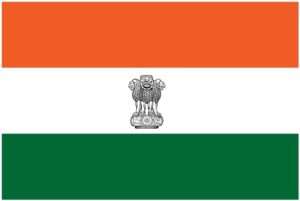 “Truth is one, the wise call it by many namesAnthem: Hindustan! Qaum, Mulk, Sultanate
Capital: Delhi Shareef
Official languages: Hindustani
Demonym(s): Hindustani, Indian
GDP nominal: 38.8 trillion Rupees (2023 est.)
Government: Parliamentary Constitutional Monarchy
Monarch: Shamsuddin Ganesha VIII
Prime Minister: Mullah Ashish Kumar
Currency: Hindustani Rupee
Driving side: Right
Calling Code: +4
Time zone: UTC+4:30 to UTC+6:30
“Truth is one, the wise call it by many namesAnthem: Hindustan! Qaum, Mulk, Sultanate
Capital: Delhi Shareef
Official languages: Hindustani
Demonym(s): Hindustani, Indian
GDP nominal: 38.8 trillion Rupees (2023 est.)
Government: Parliamentary Constitutional Monarchy
Monarch: Shamsuddin Ganesha VIII
Prime Minister: Mullah Ashish Kumar
Currency: Hindustani Rupee
Driving side: Right
Calling Code: +4
Time zone: UTC+4:30 to UTC+6:30 |
Vidya Sagar The Free Encyclopedia
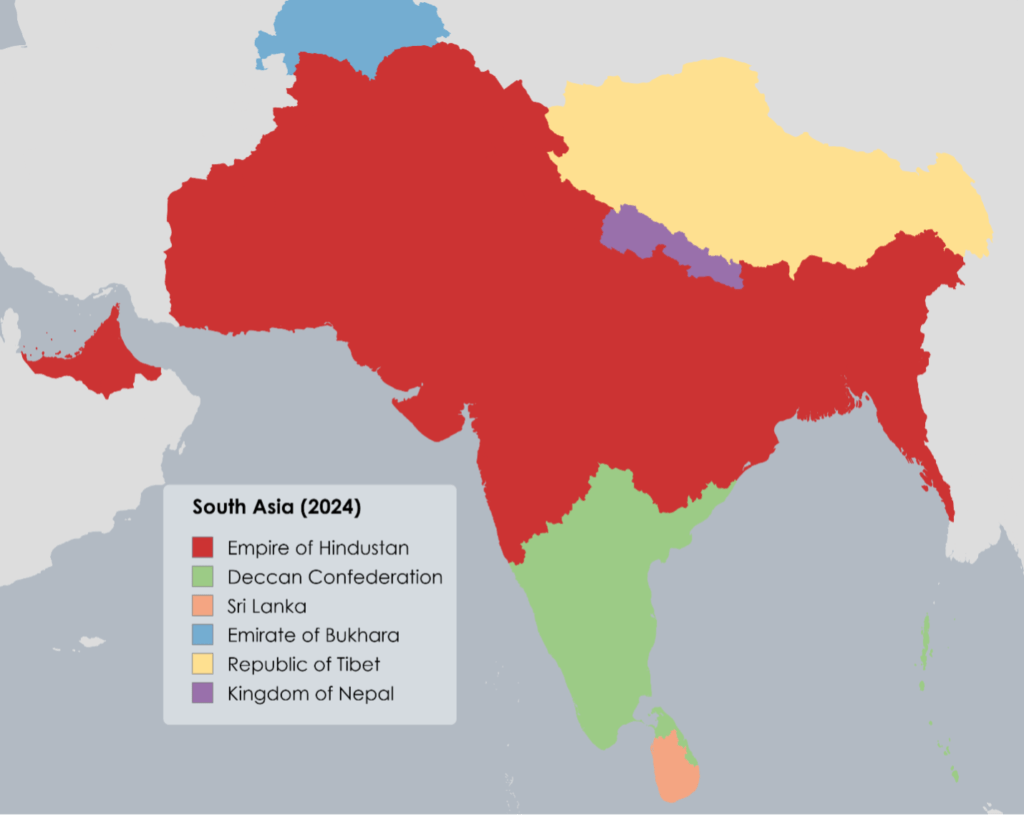
The Empire of Hindustan is a parliamentary constitutional monarchy roughly covering the northern part of the Indian subcontinent. It is the largest country in the world by population as well as the largest economy in terms of nominal GDP, although USA and the German Empire have high per capita GDP. Along with the Deccan Confederation, it is one of the two major powers in the South Asian region. Before the 1812 constitutional reforms, it was known as the Genesha Sultanate, named after its eponymous founder Raja Ganesha. The Capital is Delhi Shareef, the largest cities are Kolkata, Lahore, Mumbai, and Dacca. The country has an exclave in the Arabian Peninsula, the Khaleej Province. History Early History For history of Hindustan prior to the Ganesha dynasty, check out the article on History of India Origins of the Ganesha Dynasty The early 15th century was a period of chaos in Northern India where several dynasties followed one another in rapid succession. The chaos was set in motion with the conquest of Delhi Sultanate, ruled by the Lodhi Dynasty, by the Central Asian warlord Amir Zahiruddin Babur who founded the short-lived Mughal Dynasty (1526-1540). It was followed by the Sur Dynasty (1540-1555), Puran Das Dynasty (1555-1569), Afridi Dynasty (1569-1581), and finally the Habashi Dynasty (1581-1587). The order was finally restored when the Sultan of Bengal Sultanate Jamaluddin Ganesha captured Delhi and ushered an era of domination of native Muslim rule. The House of Ganesha was initially the second dynasty to rule the Sultanate of Bengal. The rule of Raja Ganesha (reign. 1414-1419) and his son Jamaluddin Shah (reign. 1419-1444) did not last long though. It is Raja Ganesha’s great-great-grandson Zahiruddin Ganesha who is considered by most historians to be the second founder of the dynasty when he captured Murshidabad, the capital of Bengal Sultanate in 1518. The rule of Jamaluddin and his son Nizamuddin Ganesha is considered pivotal in the history of the subcontinent and beginning of the idea of Hindustan as a nation-state and a civilization state. The Golden Age (1603-1698) Nizamuddun’s rule was followed by three equally capable rules. The synthesis of Indian and Islamic, especially Persian art and architecture was in full swing. It was in this era that we find the greatest expression of Ganesha art: Jamia Masjid Delhi, Hathi Minar Lahore, Grand Observatory of Murshidabad, Surya Mandir Multan, and the Tomb of Jahan Ara Meenakshi Begum. Persian started to lose favor among the ruling elite by the end of the 17th century. For a brief period Persian, Hindustani and Bengali vied for influence in the Ganesha court. The golden age came to an end with the ascension of Sultan Shamusuddin Jahan Soz Ganesha The Scourge of God. Hindustan’s national dish Biryani arose as an amalgamation of Persian, Indian and Central Asian culinary influences. The Navya-Nyaya school of Indian philosophy was revived in Delhi. The most interesting intellectual development of this era was the development of many valued logic by Allama Rabindra Rehmanpuri and his student Muhammad Selim Lahori. Nanak Panthi sect of Hinduism started to grow in the Punjab and Sindh regions. Great observatories were built in Banaras and Mathura. Based on many years of observations the celebrated Indian astronomer Kamal Krishnamurti, originally a Tamil transplant from South India, discovered the laws of planetary motion. Jahan Soz – The Scourge of God (1698-1728) Jahan Soz is a rare individual not just in the history of India but in the history of the world. He was the youngest nephew of Allauddin Ganesha. Highly capable, intelligent with a fiery temper, he is often compared with the Ottoman Sultan Selim the Grim because of his temper. After the death of Allauddin, the empire was engulfed in the usual succession wars between his sons. Jahan Soz initially sided with his cousin Hamza Ganesha against his brother. When it appeared that Hamza Ganesha would be crowned as the next king, Jahan Soz had him killed along with all potential male claimants. With the empire firmly in his grip, Jahan Soz launched campaigns of conquest across India and Beyond. The Ganesha invaded and sacked Toungoo dynasty’s capital Bagan (modern day Burma) in 1699. In 1702, the Safavid Shah had insulted the Indian Ambassador in a drunken stupor. In a fit of rage Ganesha gathered a massive army and launched invaded Iran through land and sea for the first and only time in history. The five-year war was devastating, the end of the Safavid was swift and Ganesha installed his youngest son Abbas Ganesha as the Shah of Iran. The cadet branch of Ganesha lasted until 1776 in Iran. After the conquest of Iran, Jahan Soz set his sight of the rest of Hindustan. However, by this time the Southern states had come to realize that Jahan Soz represented a mortal threat. Two decades of almost constant warfare, the death of 250,000 soldiers, scorched earth tactics later, the conquest of Deccan was complete. For the first time since the time of Ashoka the Great, India was unified as a singly polity but at a high cost. Jahan Soz lived for three more years; unlike other Ganesha rules he was buried in simple grave in Murshidabad. Although, most of Jahan Soz’s conquests did not last, his wars of conquest led to lasting political changes in India, Burma, and Iran. Decline (1728-1779) The death of Jahan Soz was followed by widespread rebellions in the newly conquered territories, the control of the traditional provinces became tenuous as local governors became effectively independent, giving only lip service to Delhi. Even the governor of Bengal, the traditional Ganesha heartland, stopped paying taxes. By 1749, the Emperor of Hindustan was effectively the titular ruler with his rule limited to just a few dozen miles in the vicinity of Delhi. Internecine warfare between the various ‘governors’ of the provinces looked very similar to the Taifa period of Spain, following the collapse of the Umayyad rule. Two dozen emperors ruled the empire in a span of fifty years. The problem was that during the golden age the provinces had gotten fabulously wealthy, but the administration was effectively decentralized so that with a lack of capable ruler the governor of each province was its own ruler. The period is important in the history of India as it was also the period where local rulers patronized vernacular languages in addition to the Hindustani language. Classical works like Heer Waris Shah (Punjabi), Qissa Haft Darwesh (Hindustani), Muhammad Avatara (Bengali) were written during this period. Bulleh Shah also wrote his fifty thousand verse magnus opus Ek Nukta in this period. The Portuguese tried to gain foothold in India but were rebuffed by the Nawab of Bengal in 1754. The Ganesha occupation of Pagan (Burma) lasted from 1699 to 1732 and was met with multiple uprisings. The end came when the Indian army had to retreat to take care of matters at home. The ensuring power vacuum was exploited by the Portuguese who eventually became the colonial rules of Burma. The Ganesha Empire was driven out of Deccan by the combined effort of seven southern kingdoms. The Pact of Odipi (1737) between these kingdoms is considered by many historians to be the precursor to the Deccan Confederation. Reunification (1779-1833)
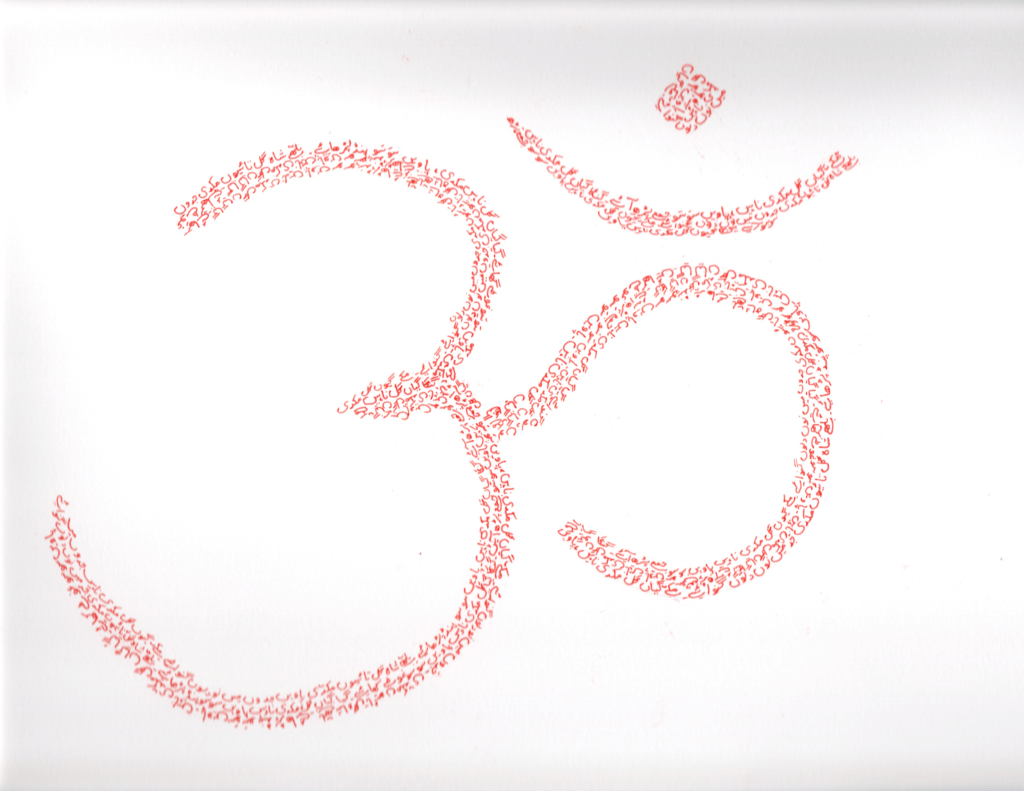 Om written with the Kalam of Bulleh Shah in Persian-Arabic script |
 Demographics
The Empire of Hindustan has a population of 1.61 billion which makes it the most populous country in the world. Major religions are Hinduism (1.01 billion), Islam (597 million), Buddhism (44 million), and Christianity (19 million). Hindustani is the lingua franca which is spoken by most citizens. The empire has 28 official languages. According to the 2021 census, 64.2% of the population was urban while the remaining 35.8% lived in urban agglomerations. The literacy rate is 97.2%. Countries with large Hindustani diaspora include Western Australia, Kenya, and Tibet.
International Relations
Deccan Confederation: While the history between the Deccan Confederation and Hindustan was marred by constant strife for centuries, in fact the creation of the confederation of the course of centuries was mainly in response to the expansion of the Empire of Hindustan. However, close cooperation between the two since World War II (1912-1915) has led to cordial relationships. Visa requirements between the two nations dropped in 1954. Although dual citizenship is not allowed, there is free movement of people.
Kingdom of Nepal: The modern state of Nepal has its origins in the ascent of Namgyal Dynasty who came into power after the collapse of Ganesha power following the death of Jahan Soz. The Kingdom made various incursions during the time of decline of the Ganesha Dynasty. Nizamuddin Ganesha IV launched a series of wars to recover the Empire’s former territories. Although he was successful in this task, he was unable to fully annex the Kingdom of Nepal. The conflict finally ended with the Treaty of Darjeeling (1839) where the modern borders between the two countries were fixed. Relationships have generally been positive since then. Nepal emphasizes its Hindu identity to distinguish itself from its larger Southern neighbor.
Republic of Tibet: For the time of restoration of Ganesha power in the early 19th century until the end of World War II, Tibet had to do a balancing act between Hindustan and China. It is a tributary of both the states during this time. When the first Chinese Civil war broke out in 1911, Tibet stopped paying tribute and became a full member of UC (United Counties). Tibet was a backward theocratic state until the Republican revolution in 1948. The Empire of Hindustan maintains multiple army bases in the country, this has deterred China from a full-scale invasion. The two counties have a good relationship, in general the foreign policy of Tibet is aligned with the foreign policy of Hindustan. Additionally, Hindustan pours billions of rupees in aid in Tibet every year to maintain the status quo.
Emirate of Bukhara: The emirate is sandwiched between the Russian Federation and the Empire of Hindustan; it encompasses historic cities like Bukhara and Samarkand. Throughout the second half of the 19th century, the Emirate was a staunch ally of the Empire which provided it manpower and ammunition to resist the Russian incursion into their country. The other emirates in Central Asia were not as lucky as all except Bukhara were gobbled by the Russian Empire by 1869. The German invasion and annexation of the western parts of the Russian Empire during World War III led to millions of Russians migrating to Central Asia. The Empire has three military bases in the country and helps man the border with Russia. The current security arrangement dates to 1992 when Hindustan invaded the Emirate to topple a Russia friendly government.
Iranian Empire: As a consequence of the military adventure of Jahan Soz, Iran was under Ganesha suzerainty for 70 years. Historians consider this period to be the beginning of modernity in Iran as Ganesha rulers upgraded the military, imported talent from Hindustan, and did widespread reforms in agriculture. Relationships between the two empires oscillated between friendship and hostility after the fall of the Iranian branch of Ganesha dynasty. It was the conquest of all of Baluchistan by Hindustan that convinced Iran that they should keep the peace with Hindustan. Surprisingly only a few years after the conquest that Hindustan allied with Iran to defined. Historians speculate that without Hindustani assistance Azerbaijan would have been incorporated in the Russian Empire. The two countries have enjoyed cordial relationships since the beginning of the 20th century. There have been multiple marriages between two royal houses.
Ottoman Empire: The empire has cordial relationships with the Ottoman Empire. The role of Indian soldiers in stemming the tide against the Allies during the first two world wars is considered the single most important factor in the survival of the Ottoman Empire. The Battle of Sofia is commemorated as friendship day in both the countries. Most of the Hindustan Empire’s energy needs are met via energy deals with the Ottomans. After the discovery of oil in the Middle East, the Ottoman Empire became fabulously wealthy, and heavily invested in the Empire of Hindustan.
Culture
Demographics
The Empire of Hindustan has a population of 1.61 billion which makes it the most populous country in the world. Major religions are Hinduism (1.01 billion), Islam (597 million), Buddhism (44 million), and Christianity (19 million). Hindustani is the lingua franca which is spoken by most citizens. The empire has 28 official languages. According to the 2021 census, 64.2% of the population was urban while the remaining 35.8% lived in urban agglomerations. The literacy rate is 97.2%. Countries with large Hindustani diaspora include Western Australia, Kenya, and Tibet.
International Relations
Deccan Confederation: While the history between the Deccan Confederation and Hindustan was marred by constant strife for centuries, in fact the creation of the confederation of the course of centuries was mainly in response to the expansion of the Empire of Hindustan. However, close cooperation between the two since World War II (1912-1915) has led to cordial relationships. Visa requirements between the two nations dropped in 1954. Although dual citizenship is not allowed, there is free movement of people.
Kingdom of Nepal: The modern state of Nepal has its origins in the ascent of Namgyal Dynasty who came into power after the collapse of Ganesha power following the death of Jahan Soz. The Kingdom made various incursions during the time of decline of the Ganesha Dynasty. Nizamuddin Ganesha IV launched a series of wars to recover the Empire’s former territories. Although he was successful in this task, he was unable to fully annex the Kingdom of Nepal. The conflict finally ended with the Treaty of Darjeeling (1839) where the modern borders between the two countries were fixed. Relationships have generally been positive since then. Nepal emphasizes its Hindu identity to distinguish itself from its larger Southern neighbor.
Republic of Tibet: For the time of restoration of Ganesha power in the early 19th century until the end of World War II, Tibet had to do a balancing act between Hindustan and China. It is a tributary of both the states during this time. When the first Chinese Civil war broke out in 1911, Tibet stopped paying tribute and became a full member of UC (United Counties). Tibet was a backward theocratic state until the Republican revolution in 1948. The Empire of Hindustan maintains multiple army bases in the country, this has deterred China from a full-scale invasion. The two counties have a good relationship, in general the foreign policy of Tibet is aligned with the foreign policy of Hindustan. Additionally, Hindustan pours billions of rupees in aid in Tibet every year to maintain the status quo.
Emirate of Bukhara: The emirate is sandwiched between the Russian Federation and the Empire of Hindustan; it encompasses historic cities like Bukhara and Samarkand. Throughout the second half of the 19th century, the Emirate was a staunch ally of the Empire which provided it manpower and ammunition to resist the Russian incursion into their country. The other emirates in Central Asia were not as lucky as all except Bukhara were gobbled by the Russian Empire by 1869. The German invasion and annexation of the western parts of the Russian Empire during World War III led to millions of Russians migrating to Central Asia. The Empire has three military bases in the country and helps man the border with Russia. The current security arrangement dates to 1992 when Hindustan invaded the Emirate to topple a Russia friendly government.
Iranian Empire: As a consequence of the military adventure of Jahan Soz, Iran was under Ganesha suzerainty for 70 years. Historians consider this period to be the beginning of modernity in Iran as Ganesha rulers upgraded the military, imported talent from Hindustan, and did widespread reforms in agriculture. Relationships between the two empires oscillated between friendship and hostility after the fall of the Iranian branch of Ganesha dynasty. It was the conquest of all of Baluchistan by Hindustan that convinced Iran that they should keep the peace with Hindustan. Surprisingly only a few years after the conquest that Hindustan allied with Iran to defined. Historians speculate that without Hindustani assistance Azerbaijan would have been incorporated in the Russian Empire. The two countries have enjoyed cordial relationships since the beginning of the 20th century. There have been multiple marriages between two royal houses.
Ottoman Empire: The empire has cordial relationships with the Ottoman Empire. The role of Indian soldiers in stemming the tide against the Allies during the first two world wars is considered the single most important factor in the survival of the Ottoman Empire. The Battle of Sofia is commemorated as friendship day in both the countries. Most of the Hindustan Empire’s energy needs are met via energy deals with the Ottomans. After the discovery of oil in the Middle East, the Ottoman Empire became fabulously wealthy, and heavily invested in the Empire of Hindustan.
Culture
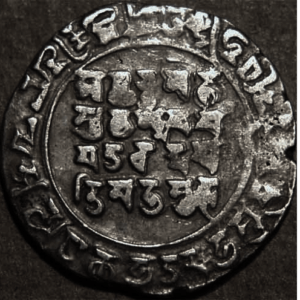
| Coin issued (c. 1608) by Nizamuddin Ganesha in imitation of Mehmood Ghaznavi’s coin. The inscription reads: avyaktam ekam, muhamadah avtarah The Invisible is One, Muhammad is the manifestation |
